Bishop and Knight in Chess
The Bishop
The Bishop may move as far as it wants in any direction, but strictly along diagonals. Each Bishop begins on a specific color square (light or dark) and must remain on squares of that same color throughout the entire game.
The Bishop captures an opponent's piece in the exact same manner in which it moves (diagonally landing on the square of the targeted piece).
The Knight
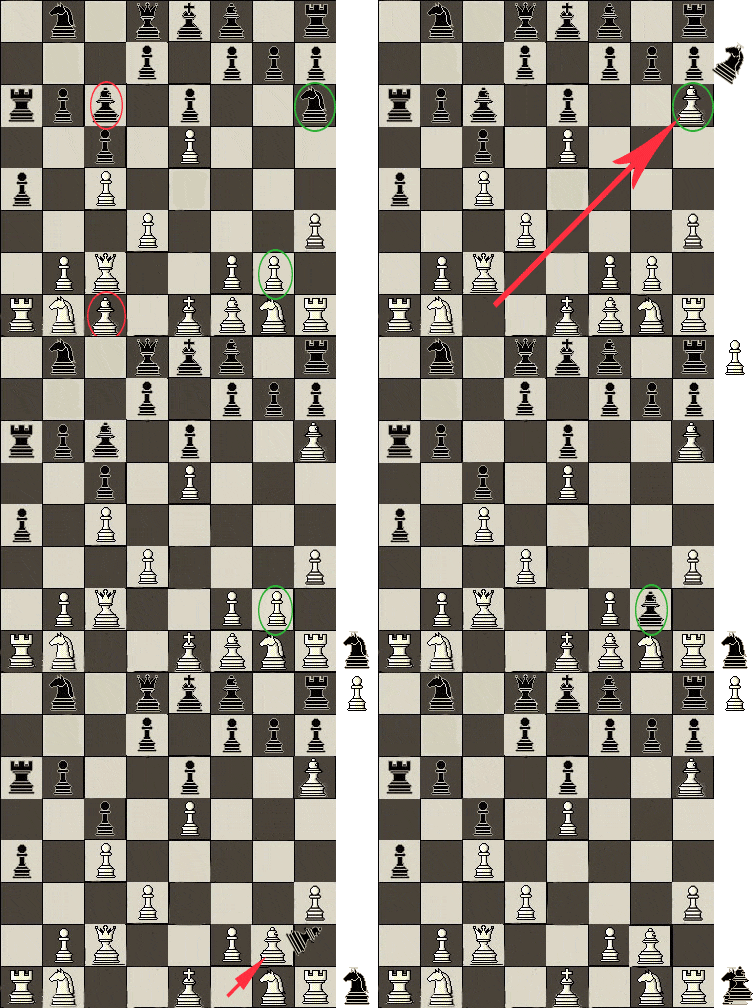
Knights are the only pieces on the board capable of jumping over other pieces, regardless of color. A Knight moves in an "L" shape: two squares in any cardinal direction and then one square at a 90-degree angle, or one square in any direction followed by two squares at a right angle.
The Knight captures an opponent's piece following its standard "L-shaped" movement, landing directly on the square occupied by the targeted piece.